What rain on snow actually does
A foot of snow holds a surprising amount of water. When a warm front arrives with rain, the snow melts and the rain falls on top of it. The ground below is often frozen solid, so nothing soaks in. The water slides across the surface and collects in the low spots: driveways, window wells and the soil against your foundation.
East Elmhurst is low and flat, close to Flushing Bay, so there is little slope to carry it off. Catch basins choked with ice and snow make it worse. We get the calls the morning after, when the sun is out and the cellar has four inches of water in it.
How water gets in
Water finds three routes. It comes through masonry walls and joints under pressure, through the floor-wall joint and through cracks in the slab. It comes in through basement windows and doors, especially from a sloped driveway. It also comes up through floor drains when the street sewer is full.
Each route leaves a different trail. White mineral streaks on block walls tell you water has been moving through the wall. A damp line on the floor beside the wall points to the joint. Brown water at the drain is a sewer issue, and that is not a normal wet basement. You treat it as contaminated.
Before the thaw
Clear snow and ice from the drains and from the area around the foundation, at least a few feet out. If you have a driveway that slopes to the house, clear a path for water to move along the edge instead of straight to the door. Make sure downspouts and leaders discharge away from the building.
Move stored items off the cellar floor and onto shelves or pallets. Cardboard boxes soak up water and grow mold. Check your sump pump, if you have one, by pouring a bucket of water into the pit. If it does not run, call a plumber before the forecast turns warm.
During the event
If water is entering, stay away from the panel and any outlets near it. Do not walk through standing water if you do not know where the wiring is. If the water is rising from the street, a pump will not help until the level outside drops, because it will refill.
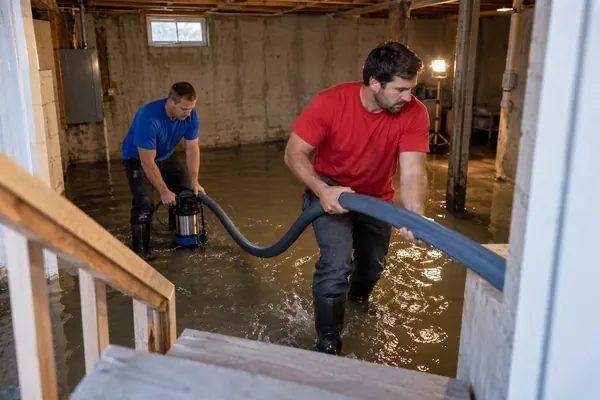
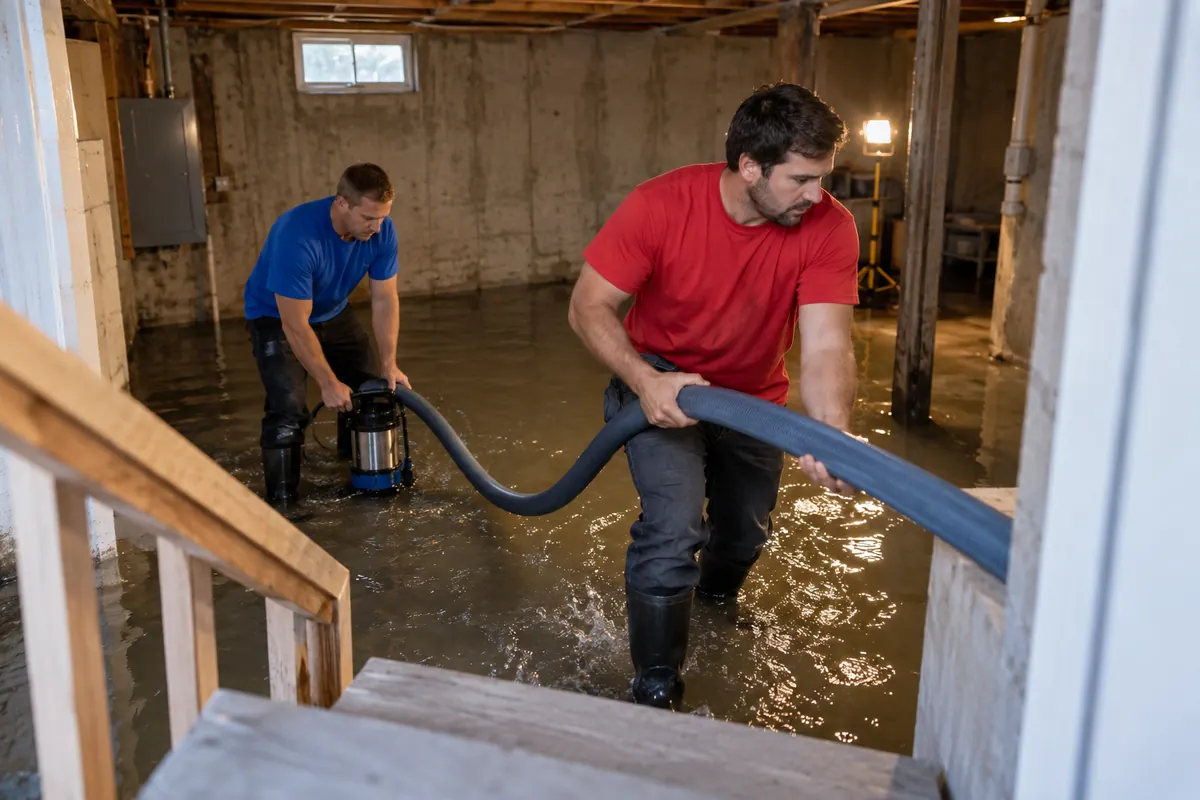
Call us and tell us how deep it is and where it is coming from. We decide whether to pump now or wait, and in what order. Our basement flooding cleanup crew pumps in stages to avoid putting stress on saturated walls.
After the water goes down
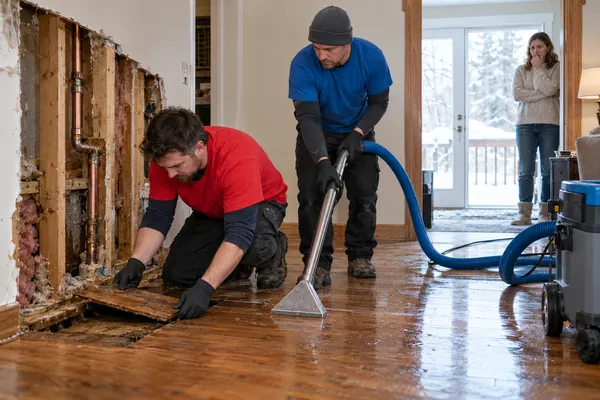
Once the cellar is pumped out, the real work starts. Wet drywall, carpet and cardboard have to be removed. Block walls and the slab need days with dehumidifiers and air movers. Do not run a space heater and open windows at once in winter. You will dry the air near the heater and make the rest of the room damp.
If the water was clean snow melt, many materials can be dried. If it came up through a drain or contained sewage, porous materials are removed. We take readings each visit and tell you what is ready for repair. Our storm and flash flood damage restoration page explains the same process for storm flooding.
What to fix afterward
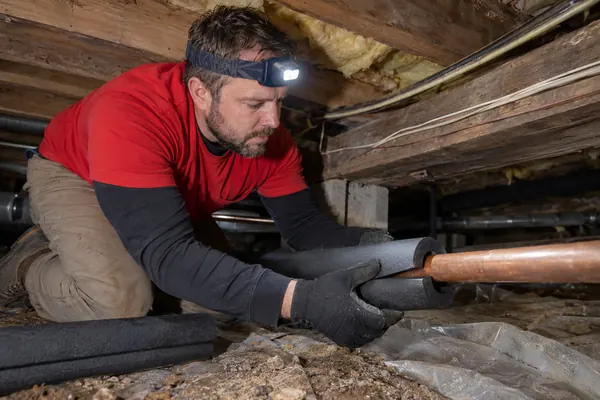
The cleanup does not stop the next flood. Look at where the water came in and ask a plumber or contractor about a sump pump with a battery backup, a backwater valve on the sewer line and better grading or a drain at the foot of a sloped driveway. These are repairs we do not do, but we can point to where water entered.
Talk to your insurance agent before the next storm about sewer backup and flood coverage. A standard homeowners policy often excludes both. Our post on homeowners insurance and water damage in New York covers what to ask.
A short pre-storm routine
When a thaw with rain is in the forecast, do five things. Clear the snow from the drain at the end of the driveway. Move anything valuable off the cellar floor. Check that the sump pump runs. Charge your phone. Tell your family where the main shutoff and the panel are. It takes less than half an hour, and on the night of the storm you will be glad you did it in daylight rather than in the dark with water at your ankles.
Quick answers
Is snow melt water contaminated?
Clean melt that seeps through a wall is usually treated as clean or gray water. Water from a floor drain is treated as contaminated.
Will a dehumidifier fix a damp cellar?
It helps keep humidity down, but it will not stop water coming through the wall. Find and fix the source first.
Why does my basement flood only in winter?
Frozen ground blocks drainage, and snow melt adds water. A basement that is fine in summer can flood in a thaw.
How soon should I call after the flood?
Right away. Mold can start in a day or two on wet materials, and silt and water set into floors.