Why low spaces fill with water in this part of Queens
Not every house here has a full cellar. Rear extensions, enclosed porches and some older frame buildings sit over a shallow crawl or a low service space. The areas are closed in, have almost no airflow and often sit below the level of the yard.
Ground close to Flushing Bay is low and flat, and rain has few places to go. Add a downspout that dumps beside the foundation and a clogged leader on a flat roof, and the space under the house stays damp long after the storm has passed.
What the floor above is telling you
Few owners crawl under the house, so the rooms upstairs report first:
- A damp, earthy smell near the floor registers in a back room
- A kitchen or bath floor that feels spongy or sags in one patch
- Fiberglass hanging down or lying on the soil
- Supply pipes that sweat or drip under the addition
- A sump pit or low drain that is still wet days after the last rain
- Mold on the underside of the subfloor when you peek through the hatch
What we find under the floor
- Torn or missing vapor barrier on the ground
- Insulation that fell and soaked up water
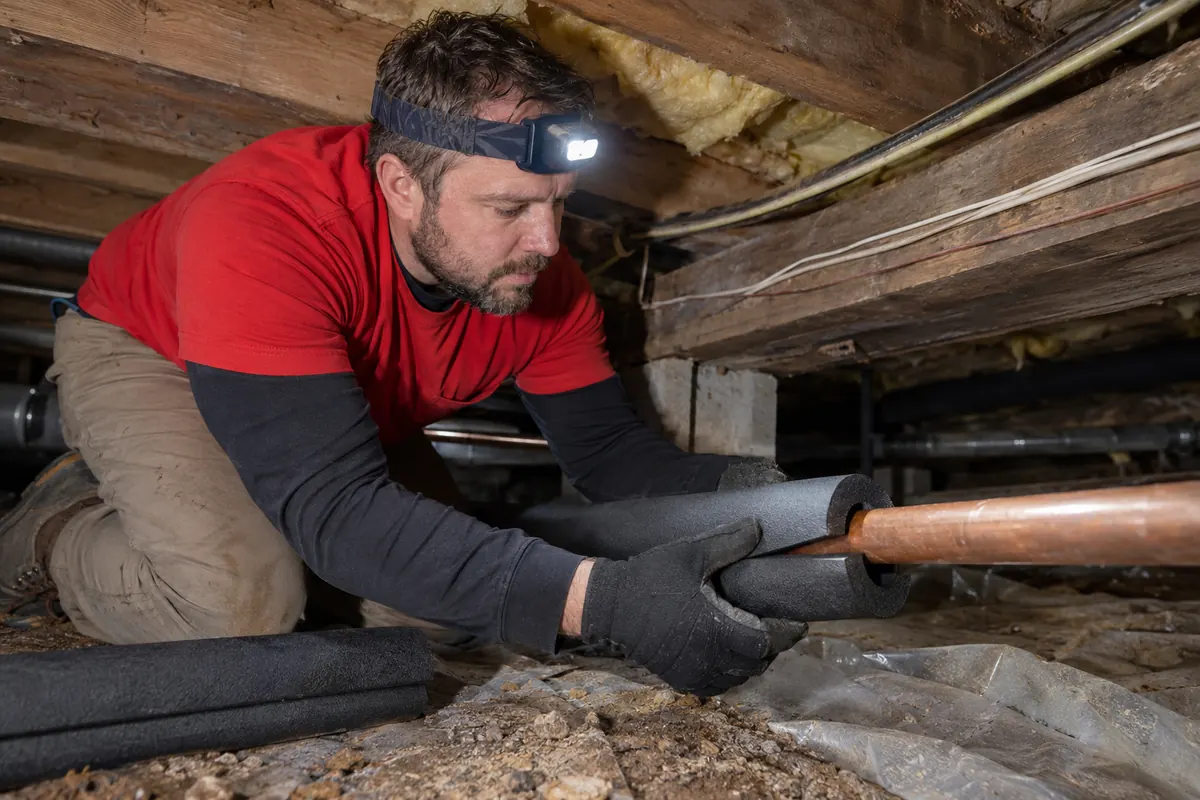
- Pipes with failed fittings or no insulation
- Standing water with no drain to carry it away
How we dry an under-floor space
Check the hazards
We look for live wiring, gas piping and the depth of the water, rig lights and plan a clear way in and out.
Pump out the water
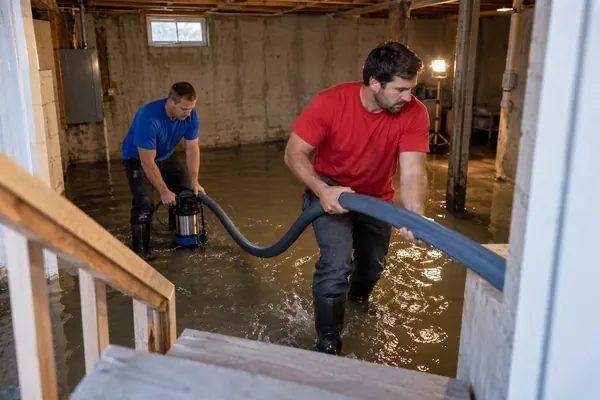
A small submersible pump clears the standing water. We note where it entered for your plumber or contractor.
Pull soaked insulation
Wet fiberglass sags and holds water against the joists, so it comes out in bags.
Stage low-profile gear
Compact air movers and a dehumidifier or desiccant unit go in, with ducting when the space is too tight for the machine.
Read the wood
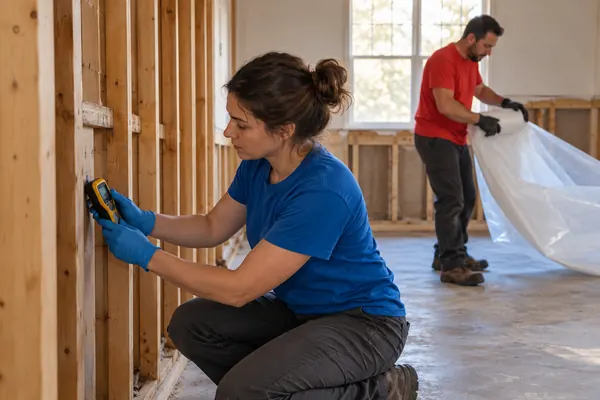
A pin meter checks joists and subfloor. We measure again on each visit until the wood hits the dry goal.
Report what we saw
You get photos, a damage list and notes on pipes, vapor barrier and drainage that need repair.
A vapor barrier is a ground sheet, not a nicety
A sheet of heavy plastic across the soil keeps ground moisture from rising into the space. When it tears or slides, damp soil dries into the air and the joists absorb it again. Plenty of shallow spaces under older additions never had one.
We do not install them, but we report what we find. If the plastic is torn or missing and the floor above is damp, a contractor can lay a new sheet once the framing is dry.
Before anyone goes down there
- Do not enter a flooded space with live wiring or a gas appliance
- Turn off power to the area only if the panel is dry and easy to reach
- Close the main water valve if a pipe is the source
- Keep pets and children away from the access hatch
- Write down when you noticed the water and when it last rained
- Photograph the hatch and any wet spots on the floor above
Crawlspace drying cost in East Elmhurst
A typical estimate for pumping and drying a shallow under-floor space runs $1,200 to $5,500 in the New York City area. Tight access, wet insulation and the number of drying days change the figure. These are not guaranteed prices. Call for an exact quote. See all price ranges.
Questions we hear about this
Can wet joists dry in place?
Usually, as long as they have not been wet for months and begun to rot. Moving air and dehumidification do most of the work.
Does the insulation have to go?
If it soaked, yes. Wet fiberglass holds water and no longer insulates. We pull it, and you replace it after drying.
How long will it take?
Three to seven days is common. Cold, damp spaces dry slowly, so we bring equipment made for low temperatures.
Will drying keep the water out?
No. Drying treats the damage, not the cause. We tell you what we saw, such as a leaking pipe or poor grading, and your plumber or contractor handles the fix.
Do you work in tight spaces?
Yes. Our crew works in low clearances, and we carry compact gear sized for them.
Read next Thaws push water into low spaces. Read how rain on snow soaks basements and crawlspaces in Queens.