How a drying job runs
Find every wet spot
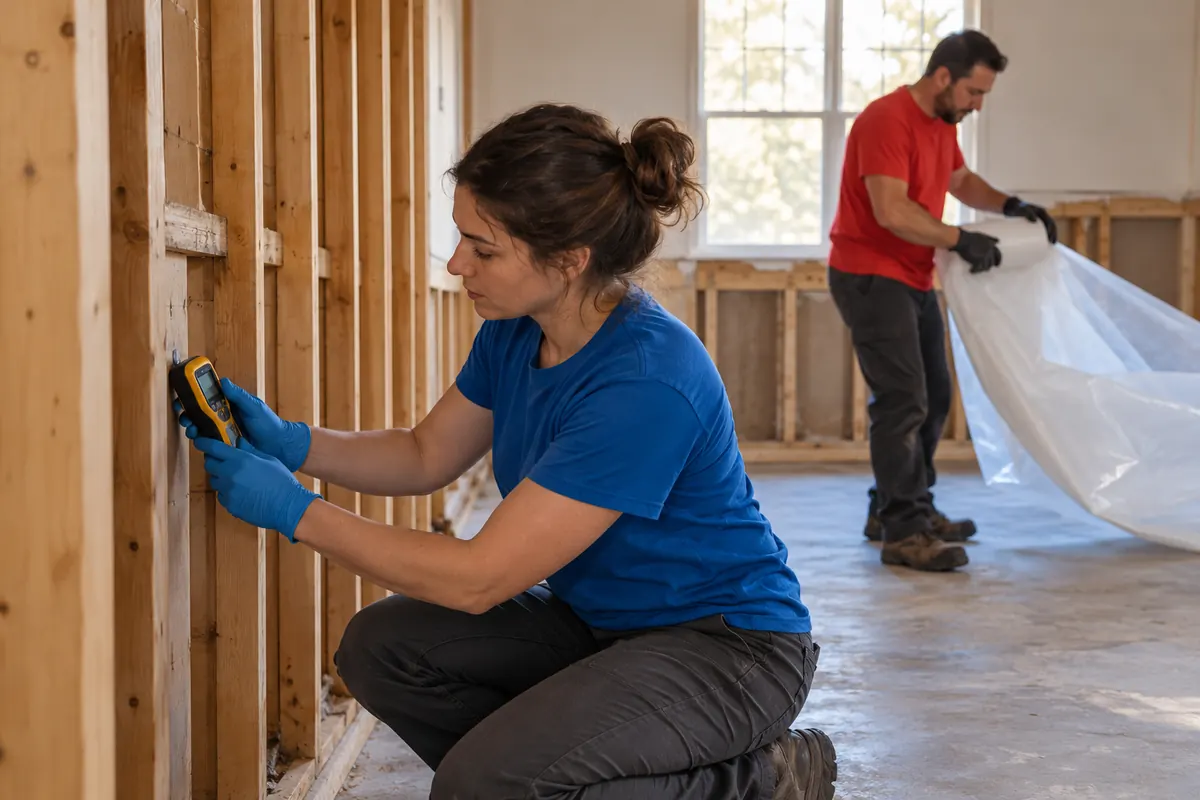
A meter and a thermal camera locate moisture behind baseboards, under floors and inside wall bays. We mark the edges.
Pick the target
We read dry wood, plaster and block in the same building to set a real goal, not a guess.
Place the gear
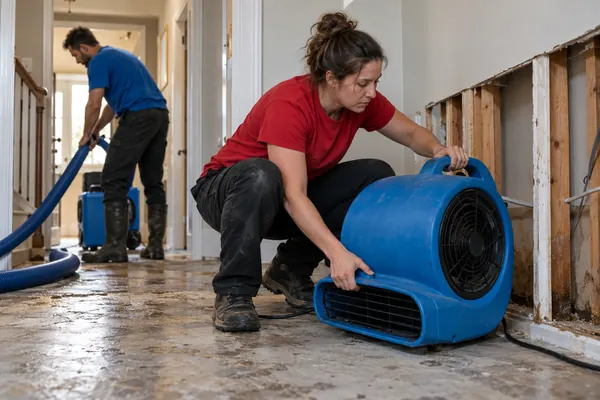
Air movers sweep dry air across wet surfaces. Dehumidifiers pull vapor from the room. Placement follows your layout, stairs and door swings.
Open small
Small holes at baseboards, or a cut-back strip of plaster or drywall, let air into wet cavities.
Visit daily
A tech returns each day with the meter, moves machines, adds or pulls equipment and updates you.
Release on the numbers
Machines leave when readings meet the target. You get the log for your records and your insurer.
Signs the building is still wet
Surface dry is not the same as dry. Watch for:
- A musty odor that returns a day after you air the room out
- Baseboards or door casings that pull away from the wall
- Paint blisters or wallpaper seams that lift
- Kitchen cabinets that swell at the bottom edge
- Cold, clammy block walls in the cellar even in July
- Windows that fog up in a room with no obvious leak
Common drying headaches
- Customers who open windows and bring in humid air
- Cabinets and toe kicks that hold water behind them
- Equipment unplugged to run something else
- Plaster and block that hold water for weeks
What each machine does
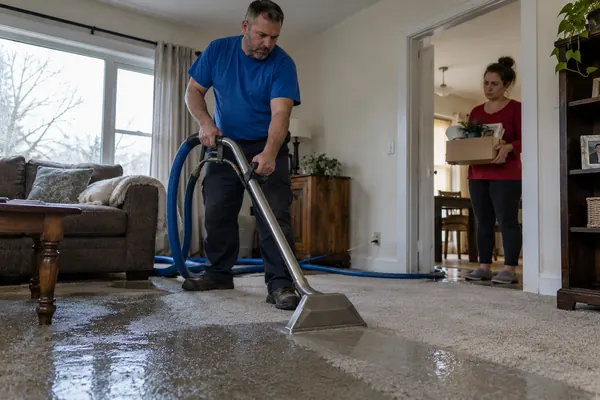
Air movers keep dry air sweeping across wet surfaces. Refrigerant dehumidifiers condense vapor out of warm rooms. Desiccant units work in cold cellars and garages, where refrigerant machines lose strength. Floor mats and wall injectors reach the places a fan cannot.
We size the gear to the room volume and the water load. Too little stretches the job. Too much wastes power. Daily readings tell us when to add, shift or pull a machine.
Brick, plaster and cellars dry slowly
Brick and concrete block act like a sponge. They take on water quickly and release it slowly. Old plaster over wood lath holds moisture longer than modern drywall, and lath can stay damp behind a surface that feels fine.
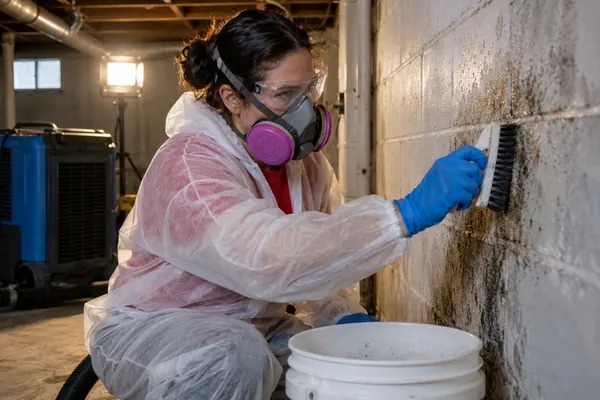
Cellars add another problem. Cool walls, little airflow and a boiler room full of piping keep the air heavy. We use dehumidifiers matched to the volume of the space, keep doors shut so the machines work only on the wet area, and watch the readings until the masonry gives up its water.
How you can help the drying work
- Keep windows and exterior doors closed while machines run
- Give the equipment its own outlet and do not add a space heater to the same circuit
- Keep the thermostat or the boiler at a steady, normal setting in winter
- Leave interior doors and closets open where the crew asks
- Tell us if a machine rattles, trips a breaker or stops
- Keep children and pets away from cords and fans
What drying usually runs in East Elmhurst
Drying jobs in the New York City area are often estimated at $1,500 to $6,000, and the number follows the equipment days, not the square feet alone. Dense masonry or plaster means more days. These are typical estimates, not guaranteed prices. Call for an exact quote. See all price ranges.
Questions we hear about this
How many days will it take?
Three to five days for most houses. Plaster, block and wet insulation can take longer. The readings decide, not the calendar.
Why is it so loud?
Air movers and dehumidifiers move a lot of air. The noise lasts a few days and stops when the machines leave.
Will my electric bill jump?
For those days, yes. Drying properly costs less than rebuilding walls that grew mold.
Is my own dehumidifier enough?
It helps a damp room. It cannot dry a soaked wall cavity or a block wall, and it does not come with a moisture log.
Do you find hidden water?
Yes. We use a meter and a thermal camera before we start and on each visit, so we do not leave wet material behind.
Read next Drying fast is how you avoid mold. Read about mold after water damage in Queens basements.