
Mold work we do in East Elmhurst
Pick the one that sounds like your problem. If you are not sure what you are looking at, call and describe it.
Mold removal after water damage
Containment, removal of infested drywall and framing cleanup after a leak, flood or burst pipe left walls damp.
View service →Black mold cleanup
Dark, spreading growth on drywall, wood and ceilings is sealed off, removed and bagged before it reaches clean rooms.
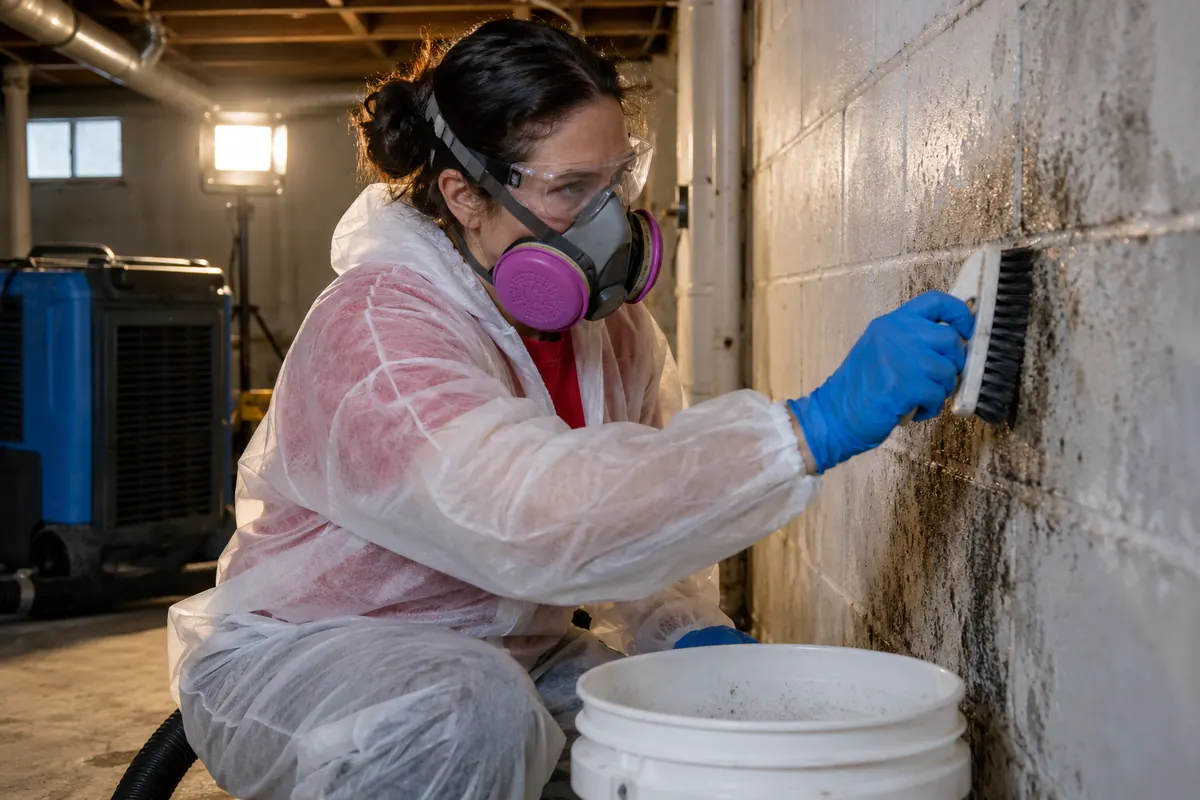
Cellar and block wall mold
Mold on concrete block, joists and stored items in damp basements gets cleaned, and the walls are dried out.
View service →Top-floor and ceiling mold
Flat-roof leaks and wet insulation grow mold under the ceiling. We open it up, remove it and dry the framing.
View service →Bathroom and closet mold
Weak exhaust fans, leaking vanities and exterior closet walls hold dampness. We remove growth and show you the cause.
Mold after a flood or sewer backup
Storm water and sewage that soaked drywall and flooring need fast removal and drying before spores take hold.
View service →Mold in rentals and apartments
Leaks from the unit above feed mold in ceilings and walls. We coordinate with tenants and managers.
View service →Moisture control after removal
Dehumidifiers and air movers bring the space to a stable moisture level so growth has nothing to feed on.
View service →Problems we solve
A musty smell you cannot trace
We find the damp spot behind the wall, under the floor or above the ceiling, then deal with what is growing there.
Black or green patches on walls
Visible growth on drywall, plaster and ceilings is cut out, bagged and removed under containment.
Mold that came back after cleaning
Scrubbing the surface does not fix a wet cavity. We open it, dry it and remove what is feeding it.
Wet insulation and framing
Soaked insulation in walls, roof spaces and cellars is removed, and framing is cleaned and dried.
Mold after a leak nobody caught
Slow leaks behind vanities, dishwashers and water heaters hide growth for weeks. We trace the source and clean up.
Spread to other rooms
Poor handling spreads spores through the house. Sealed containment and HEPA filtering keep clean rooms clean.
What makes mold an East Elmhurst problem
Wet cellars after storms
Cloudbursts push water into below-grade rooms, and a cellar that stays damp for a few days is a place mold can start.
Masonry that wicks water
Block and brick walls pull moisture from soil and hold it, so basement walls stay cool and damp through the summer.
Sewer backups
Backups soak drywall and stored boxes with contaminated water. Wet organic material feeds growth quickly.
Humid summers, closed windows
From June to September the air outside is heavy, and apartments with weak exhaust fans trap moisture in bathrooms and closets.
Shared walls and stacked units
In two-family homes and small apartment buildings, a leak in one unit feeds mold in the ceiling or wall of another.
Common types of mold found in Queens homes
You do not need to identify the species to deal with mold, but it helps to know what you may be looking at. Penicillium and Aspergillus often show up on wet drywall, carpet and cardboard and look green, blue-green or powdery. Cladosporium can appear on cold, damp surfaces such as window sills and cellar walls. A greenish-black growth sometimes called black mold tends to need materials that stayed wet for a long time, like paper-faced drywall behind a leak.
Color alone does not tell you how risky a patch is. A black spot is not always the dangerous kind, and a white one is not always harmless. Our approach is the same for all of them: contain, remove the infested material, clean the air and the surfaces, and dry the source.
Hidden mold behind paneling, vanities and block walls
Most of the mold we remove in East Elmhurst is not on a visible wall. It is behind the paneling in a cellar rec room, under a bathroom vanity, behind a dishwasher or on the cold side of a block wall that was covered with drywall. You find it by smell first and by opening the wall second.
- A musty smell that comes back after cleaning
- Paneling or drywall that feels cool and slightly soft at the base
- Peeling paint or powdery white crust on block and brick
- A vanity or cabinet base that has swelled or stained
- A closet on an exterior wall with spotted shoes, bags or boxes
Mold after a sewer backup or flood
Water that comes in through a floor drain or across the street carries contaminants and organic matter, and it soaks porous materials deeply. Mold can begin to grow on wet drywall, carpet and stored boxes in as little as a day or two, and it grows faster in a warm, humid cellar.
After a backup or flood, speed counts. Our sewage backup cleanup and storm and flash flood damage restoration crews remove wet porous material first, then dry the structure, so the mold job is smaller or never starts.
Testing, air samples and when they help
A mold test tells you what is in a sample or the air at one moment. It does not tell you how to clean it, and it does not replace seeing the damage. Testing can help in a few cases: a real estate sale, an insurance dispute, a tenant and landlord disagreement, or a person with health concerns who wants to know more.
If you want a test, choose an independent tester who does not do the removal, so no one has a stake in the result. We will work from the test and from what we see in the wall. If you are not sure whether you need one, call and describe the problem.
Mold in rentals: tenants, landlords and the super
A tenant who finds mold should tell the landlord or super in writing, with photos, and keep a copy. A landlord should look for the moisture source, such as a leak, a roof problem or a ventilation issue, rather than only cleaning the surface. In New York, landlords have duties to keep units livable, and city and state agencies deal with mold complaints in housing. This is general information, not legal advice.
We can scope the work with the owner and the tenant together, tell each of them what we found and give the owner a record of the source, the removal and the drying. Our apartment and multi-unit water damage page describes how we manage shared losses.
Keeping a cellar dry after removal
Removal is only half of a mold job. The rest is keeping the space from getting wet again. A dehumidifier that holds indoor humidity between roughly 30 and 50 percent does a great deal, but only if the walls and slab are not taking on water.
- Run a dehumidifier in the cellar through the humid months and empty it or connect it to a drain
- Keep stored items on shelves or plastic bins, away from walls
- Point downspouts away from the foundation and clear window wells
- Fix leaks as soon as you see them, and do not store cardboard on a damp floor
- Ventilate bathrooms and laundry areas, with fans that vent outdoors
- Check for new stains, a musty smell or condensation after heavy rain
What you can clean yourself and what you should not
The EPA's general guidance is that a small area of mold, about ten square feet or less on a hard surface, can usually be cleaned by the homeowner with detergent and water, gloves and a mask. Anything on drywall, insulation, carpet or ceiling tile, any area larger than that, and any area connected to sewage or flood water should go to a trained crew.
Also stop and call if you are not sure what is behind the stain, if the growth keeps returning, if anyone in the house has asthma or a weak immune system, or if the mold is near the heating or cooling system. Our mold remediation service starts with an assessment, and we will tell you plainly if the job is small enough to handle yourself.
How we remove mold
Track down the water
We find where the moisture comes from first. Removal will not last if a pipe still drips or a wall stays damp.
Seal the work area
Plastic sheeting and negative air machines keep spores from reaching clean rooms.
Gear up
The crew wears respirators, goggles and disposable suits, and covers floors to keep debris off clean surfaces.
Take out infested material
Moldy drywall, insulation and carpet are cut out and bagged. Framing is cleaned or sanded back.
Scrub the air and surfaces
HEPA vacuums and air scrubbers capture spores floating in the air and settled on what stays.
Dry and confirm
Dehumidifiers and air movers dry the space. Readings tell us, and you, when it is ready for the rebuild.
Mold removal cost in East Elmhurst, NY
| Mold job | Typical estimate |
|---|---|
| Single closet or bathroom wall | $1,800–$3,200 |
| Top-floor ceiling or roof-space section | $2,500–$5,500 |
| Cellar walls and joists with drying | $3,000–$8,000 |
| Several rooms or a full floor | $5,500–$10,000 |
| HVAC-involved or large-area jobs | $8,000–$10,000+ |
These are typical estimates for the New York City area, not guaranteed prices. Rebuilding, painting and flooring replacement are separate. Call for an exact quote.
Mold questions we hear in East Elmhurst
Can I clean mold with bleach?
Bleach may lighten a stain but does not reach mold in porous materials like drywall. Removing the material is the reliable fix.
Do I need mold testing?
Not always. If you can see or smell it, treatment is the same. Testing can help with a sale or a claim, and an independent tester avoids a conflict of interest.
How fast does mold grow after a flood?
It can begin on wet drywall, carpet and cardboard within a day or two, often 48 to 72 hours, which is why quick drying matters.
Will mold come back?
Only if moisture returns. We dry the structure and point out causes like leaks, wet cellars and weak ventilation.
Does insurance cover mold?
Often only when it follows a covered water loss, and sometimes with a cap. Gradual leaks and long-term humidity are commonly excluded. Check your policy.
Can I stay home during removal?
For small, contained jobs, often yes. For large areas or if someone has asthma or an immune condition, a short stay elsewhere may be safer.
Seeing or smelling mold in your East Elmhurst home?
Call. We will look, tell you what is needed and start the plan. (347) 284-0905.