What water damage looks like across the city
A crew that works out of East Elmhurst sees the city one building at a time: a prewar brick two-family in Jackson Heights, a six-story walk-up in Astoria, a co-op with a rooftop tank in Elmhurst, a corner store on Northern Boulevard with a stock room below the sidewalk. The water behaves differently in each, but the questions are the same. Where did it start, how far did it go and who else is involved?
That last question is what separates a New York job from a suburban one. There is almost always a neighbor, a super, a managing agent or a board in the picture, and sometimes all four. We plan for that from the first call, which is why we ask about the building as much as about the water.
The ground under the city
Most of Queens sits on glacial deposits left behind when the last ice sheet retreated: layers of sand, gravel and silt, with pockets of clay. Close to the shoreline, large areas were filled in over the last century to make dry land. The part of the borough around Flushing Bay and LaGuardia is a good example, low and flat with a water table that rises quickly after heavy rain.
What that means indoors is simple. Cellar walls and slabs in these neighborhoods sit in damp soil for much of the year. Sandy soil lets water move through fast, and fill and silt let it hang around. After a long rain, groundwater presses on block and brick walls from the outside, and cellars that are fine in August start to weep in March.
Combined sewers and the cloudburst problem
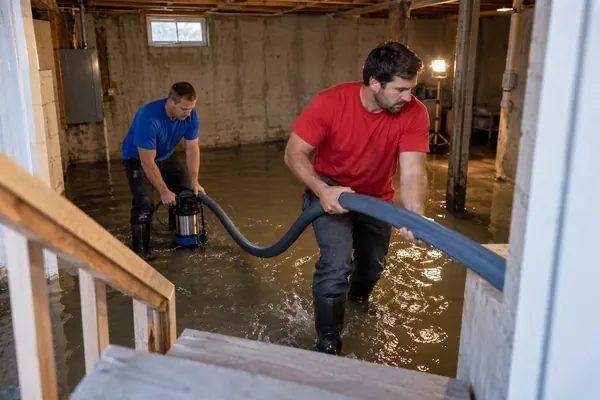
A large part of the city drains through combined sewers. Household waste and rainwater share a single pipe, which is built for roughly an inch and three-quarters of rain an hour. A summer cloudburst can drop more than that, and when the pipe fills, water has nowhere to go but back up the lowest drain in a building.
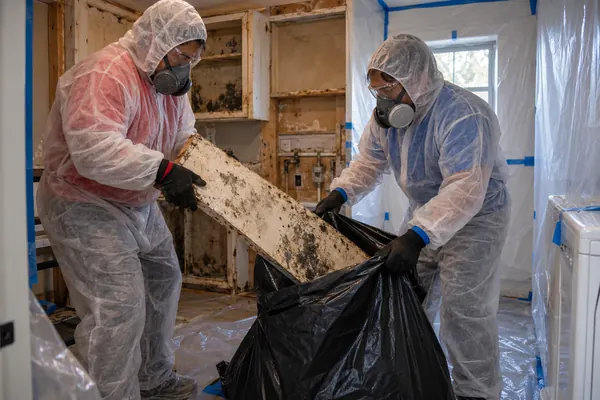
That is why so many of our sewage calls come from cellars, garden-level apartments and ground-floor bathrooms. The water in them is not rain. It is a mix of storm runoff and waste, and we treat every such loss as contaminated. If your drain is gurgling in a downpour, stop using water and call. Our sewage backup cleanup crew arrives with suits, respirators and pumps.
Buildings and the things that fail in them
Older New York buildings have long vertical pipe runs, cast iron stacks, plaster ceilings and radiators fed by steam or hot water. A failure in one place spreads through all of them. The usual culprits are worth knowing:
- Radiator valves and risers that leak into the unit below, especially at the start of the heating season
- Cast iron drain stacks that crack or clog and sweat into ceilings
- Washer and dishwasher hoses on the upper floors of walk-ups
- Flat roofs and parapets that pond water and leak at the seams
- Rooftop tank lines and building risers in larger buildings
- Cellar floor drains that back up when the street sewer fills
Winter in the five boroughs
New York winters swing between hard freezes and sudden thaws, and plumbing in exterior walls and unheated rooms takes the punishment. A boiler that fails on a January night turns an empty apartment into a freezer in a few hours. A thaw after a snowstorm sends melt into low cellars and through flat-roof seams.
Our frozen and burst pipe cleanup work covers the aftermath: water extraction, opening wet plaster, and drying walls and floors with readings on every visit. If you are heading away in cold weather, our post on leaving a home or unit empty in winter is worth five minutes.
Co-ops, condos, supers and access
In a co-op or condo, the building's policy generally covers the structure and the unit owner's policy covers the interior and belongings, but the lines are not the same in every building. Ask your managing agent who is responsible before work starts. Many buildings also require contractors to provide a certificate of insurance and to book freight elevator time, so mention it when you call.
In a two- or three-family house, a tenant, an owner and an upstairs neighbor may all be involved. We keep a separate file for each unit and share it with the people who need it. Our apartment and multi-unit water damage page explains how we run those jobs.
Commercial space along the main streets
Restaurants, salons, shops and offices on Astoria Boulevard, Northern Boulevard and the avenues of Queens often have a cellar stock room, a flat roof and a landlord. A ceiling leak at closing time or a flooded kitchen floor costs money every hour it stays wet. We plan phases so you can keep the register open while the wet zone is isolated and dried. See commercial water damage restoration for how that works.
Mold after a loss in New York buildings
In a closed apartment or a cellar, a leak that stays wet for two or three days is enough to start mold on drywall, plaster and cardboard. Warm radiators, tight windows and little airflow help it along. The first sign is often a smell in a closet or behind a bathroom wall long before anything is visible.
We dry first and look for growth as we go. If we find it, our mold remediation crew seals the area, removes infested material and cleans the air. In a building with other units, we also tell the owner or manager what we found, so the cause is fixed and the next unit is not hit the same way.
Before the next storm: a short checklist for city buildings
You cannot stop a cloudburst, but a few steps cut the damage. Most take less than an hour, and they matter most for cellars, garden units and ground-floor shops:
- Lift boxes, electronics and files off the floor onto shelves or pallets
- Clear leaves from the catch basin near your building if it is safe to reach
- Check that roof drains and leaders are not clogged with debris
- Test the sump pump if there is one, and know where the main shutoff is
- Photograph each room so you have a baseline for your insurer
- Save our number and your super's number in your phone
What a call from you sets in motion
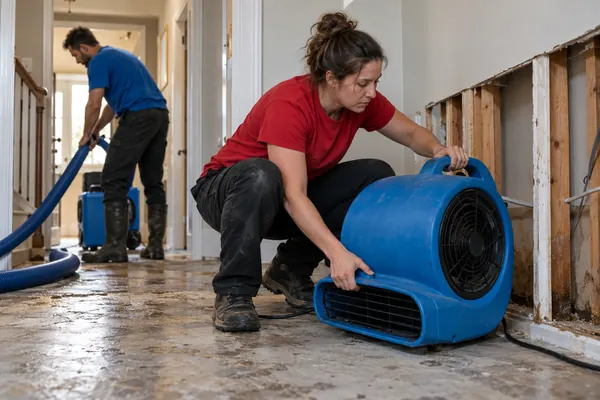
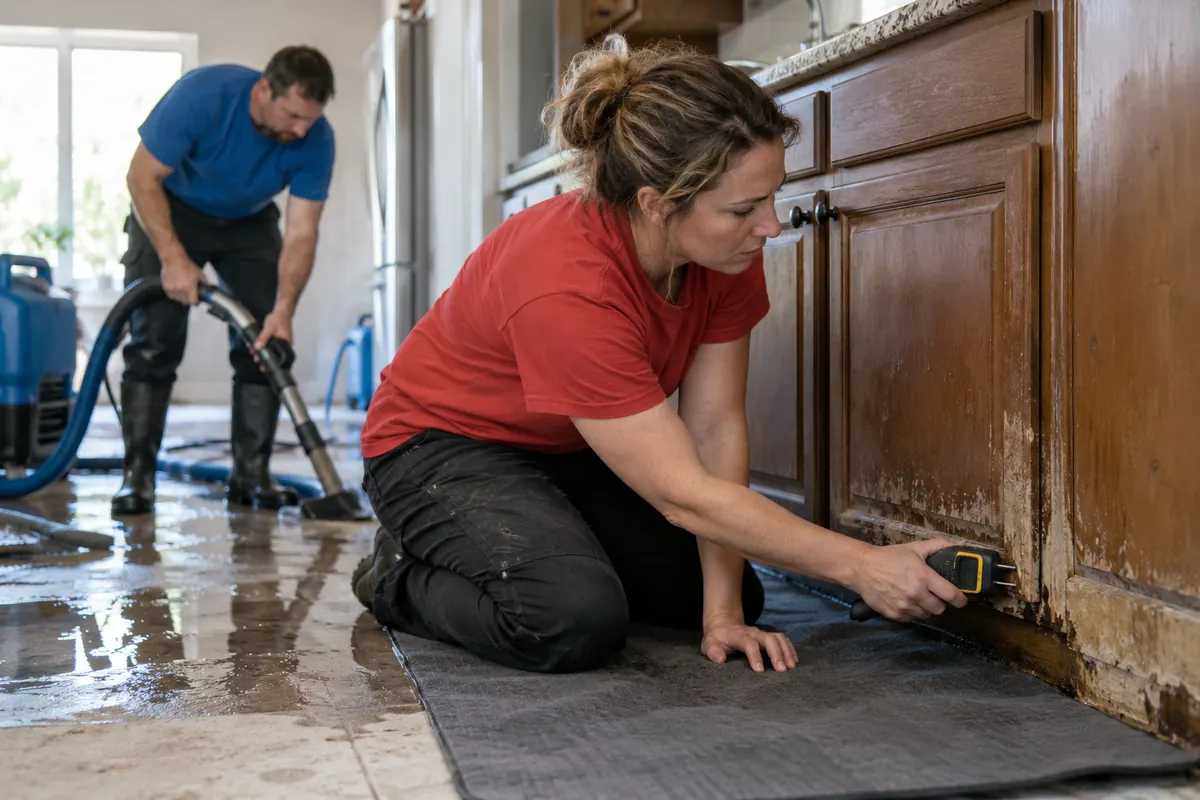
Tell us the address, where the water is and whether it is still moving. If you are in a building, tell us who the super or manager is. We will say what to shut off, and a crew heads out with pumps, extractors and moisture meters. After the water is out, machines dry the structure and a technician returns each day with a meter until the readings match dry material.
You end up with photos, readings and a written scope for your insurer. If you are not sure whether the problem needs a crew tonight, call and describe it. We will say honestly whether it can wait for morning.
Water damage restoration cost in New York, NY
These are typical estimates for New York City, not guaranteed prices. Plumbing repairs, rebuilding and new flooring are separate. Building rules, access limits and after-hours work can raise a figure. Call for an exact quote.
| Job type | Typical estimate |
|---|---|
| Small appliance or radiator leak, one room | $800–$2,500 |
| Burst pipe affecting two or three rooms | $2,500–$8,000 |
| Cellar flood from storm water, clean or gray | $3,000–$9,000 |
| Sewage backup in a cellar or ground-floor unit | $3,500–$15,000+ |
| Mold removal with containment, one area | $1,800–$6,000 |
| Shared-wall loss across several units | $5,000–$20,000+ |
| Restaurant or storefront water loss | $6,000–$25,000 |
Questions we hear in New York City
Do you work only in Queens?
Our base is East Elmhurst, so Queens is where we are fastest. We also take calls in the other boroughs. Tell us the address and we will say how soon a crew can reach you.
Who is responsible if the leak came from the apartment above?
It depends on the cause, the lease and the building's rules. We document the path of the water and give you the records, and you can share them with the landlord, board and insurers.
What about a co-op that wants a certificate of insurance?
Tell us when you call. Many boards ask contractors for a certificate and for elevator booking, and it is easier to arrange before the crew arrives.
Can you work in an occupied building?
Yes, often. We keep hoses and cords out of halls and exits, protect belongings and update tenants on timing.
Does insurance cover sewer backup in the city?
Standard homeowners policies often exclude it unless you added a water backup endorsement. Ask your agent before the next storm.
Read next Why Does Sewage Come Up Your Cellar Drain When It Rains?.