Why flat roofs leak on East Elmhurst houses
Many attached and semi-detached houses here wear flat or low-slope roofs. They shed water slowly and depend on a membrane, flashing and drain leaders to carry it off. When a drain clogs, water ponds and finds the seams.
Freeze and thaw is rough on them. Water seeps into hairline cracks, freezes, widens them and then drains into the ceiling when the weather turns. Snow melt on a low roof can keep leaking for days after the storm ends.
What a leaking roof looks like from below
Your ceilings will tell you before the roofer does:
- A brown or yellow stain that gets bigger after every rain
- Paint that bubbles or old plaster that flakes and crumbles
- A ceiling that droops in the middle like a belly
- Drips that start a day after snow begins to melt
- A damp, musty smell in the top-floor rooms
- A light fixture that fills with water or flickers on a rainy night
Ceiling leak problems
- Insulation that stays wet above the stain
- Plaster ceilings that are heavy when saturated
- Leaks that only show up after snow melts
- Roof drains clogged with leaves and debris
How we dry a roof leak
Test the ceiling
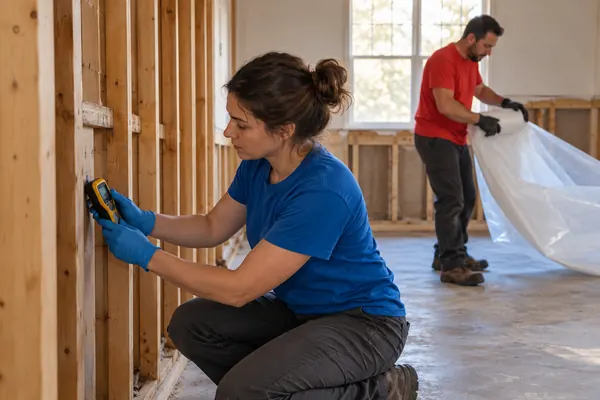
We press a moisture meter to the surface and look for sag. A bulge full of water is punctured to release it safely.
Take out the wet layer
Wet plaster, drywall and insulation come down. Dry sections above the stain often stay.
Open the cavity
Joists and roof deck are exposed so air can reach them.
Run air and dehumidifiers
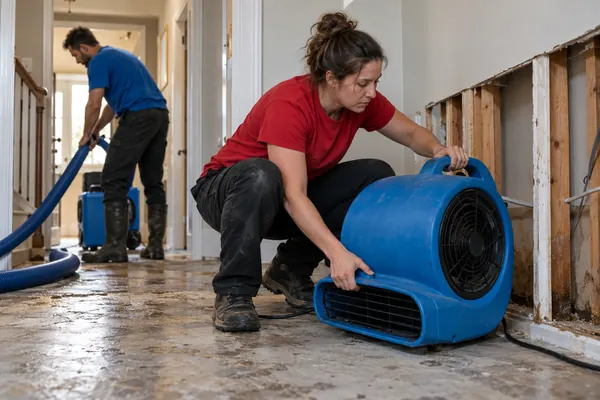
We push dry air through the open ceiling and dry framing and any wall below.
Check for mold
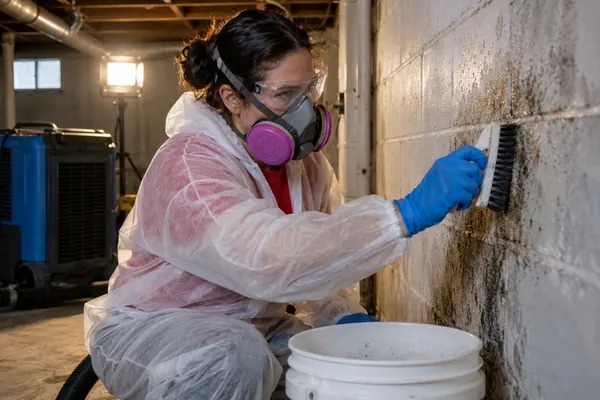
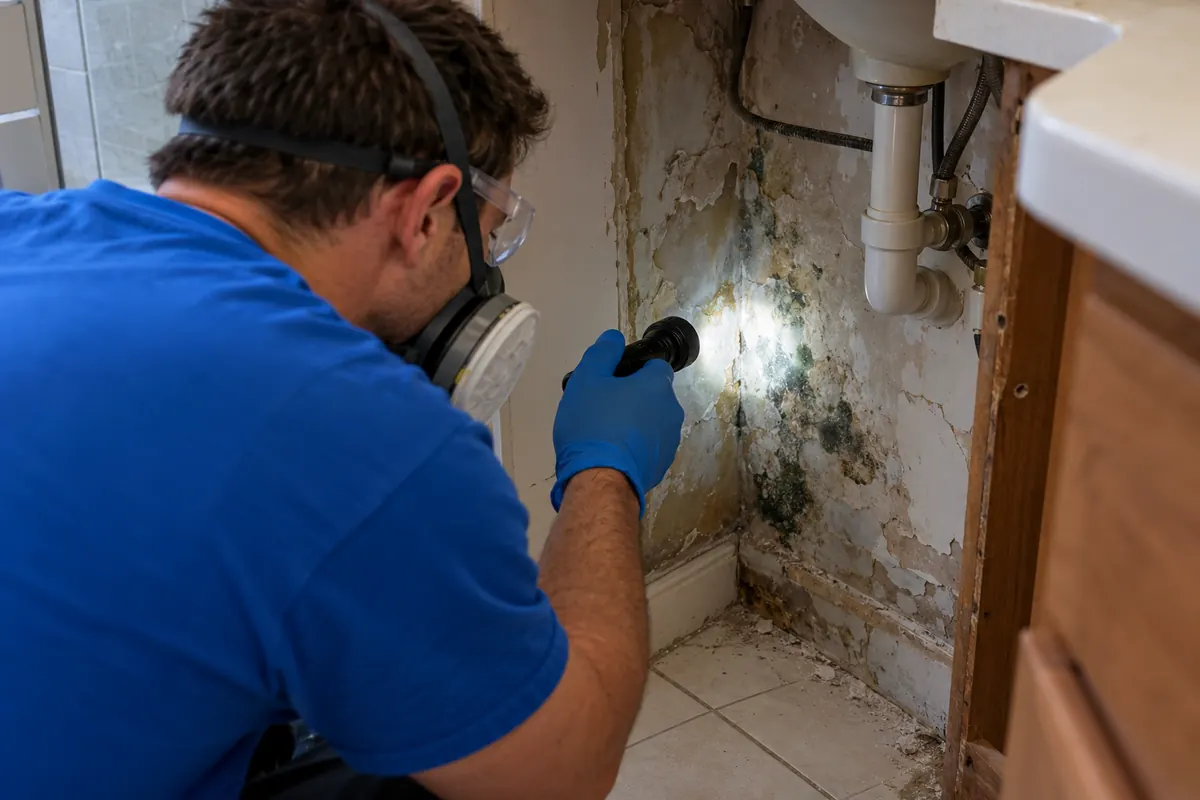
Cool, damp roof spaces grow mold fast. We inspect rafters and decking and clean what is affected.
Pass it to the roofer
Drying does not fix the roof. We show where water got in so your roofer can repair it before the next rain.
While the ceiling is dripping
- Set a bucket under the drip and lift valuables off the floor
- Poke a small hole in a bulging, water-filled ceiling to drain it, standing to the side
- Turn off lights and fans on a wet ceiling circuit
- Move furniture out from under the stain
- Photograph the stain and any roof damage visible from the ground
- Call a roofer to stop the source while we handle the water
Ponding on a flat roof
Flat roofs hold shallow puddles after rain. A little is normal. A puddle that stays for days stresses the membrane and finds every seam. Clogged drains and leaders are the usual cause.
Clear drains and an eye on standing water after storms catch many leaks early. If you can see the roof from an upper window, look after the next rain.
Roof and ceiling leak cleanup cost in East Elmhurst
A typical estimate for ceiling and attic water damage in the New York City area is $1,000 to $5,500. Wet plaster, insulation and the number of floors affected change it. The roofer's repair is separate. These are not guaranteed prices. Call for an exact quote. See all price ranges.
Questions we hear about this
Does the whole ceiling have to be replaced?
Not always. We cut back to where the material is dry and clean. A small stain often means a patch, not a new ceiling.
What about the insulation?
Wet insulation holds water against the framing and stops insulating. It comes out and is replaced after drying.
Will insurance cover a roof leak?
Sudden storm damage is often covered. Wear, age and long-term leaks often are not. Dated photos help.
Can mold grow up there?
Yes, if the area stays wet. Opening and drying quickly is the strongest defense.
Who repairs the roof?
A roofer does. We dry the building and tell you what we saw so the roofer knows where to look.
Read next Winter makes flat-roof leaks worse. Read about ice, snow melt and flat roofs in Queens.